
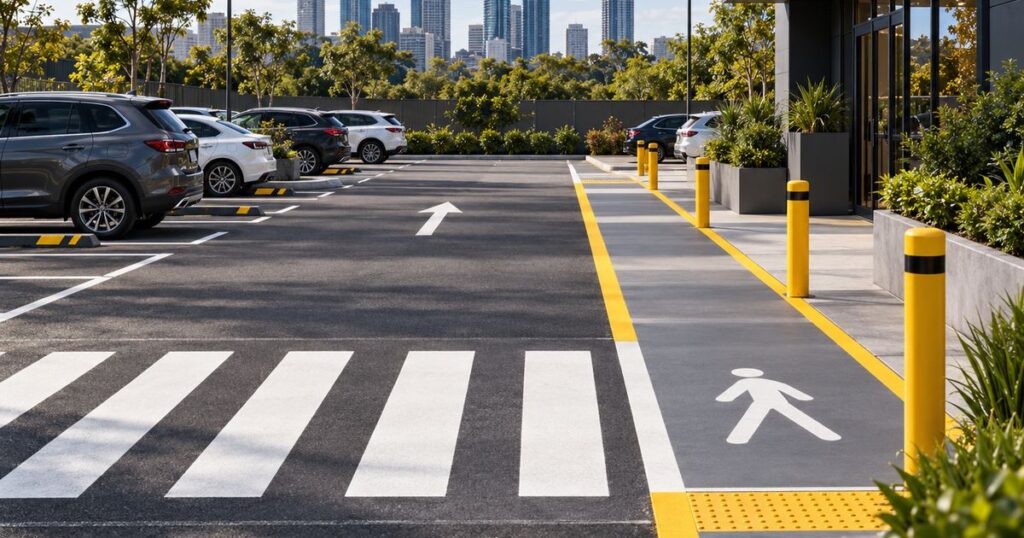
Line Marking BrisbaneLine Marking Brisbane Car park line marking is easy to overlook when it is fresh, bright and doing its job.
It usually gets attention only when parking bays become difficult to see, directional arrows start disappearing or drivers begin creating their own version of where they think they should park.
For property managers, facility managers and business owners, worn line marking is more than an appearance problem. Clear markings help organise vehicles, identify pedestrian areas, define loading zones and make a property easier for visitors, staff and contractors to navigate.
So, when should you repaint car park line marking?
There is no single repainting schedule that suits every site. Traffic volume, surface condition, weather exposure and the type of marking all affect how quickly lines deteriorate.
Instead of relying only on age, look for these seven warning signs.
1. The Lines Are Becoming Difficult to See
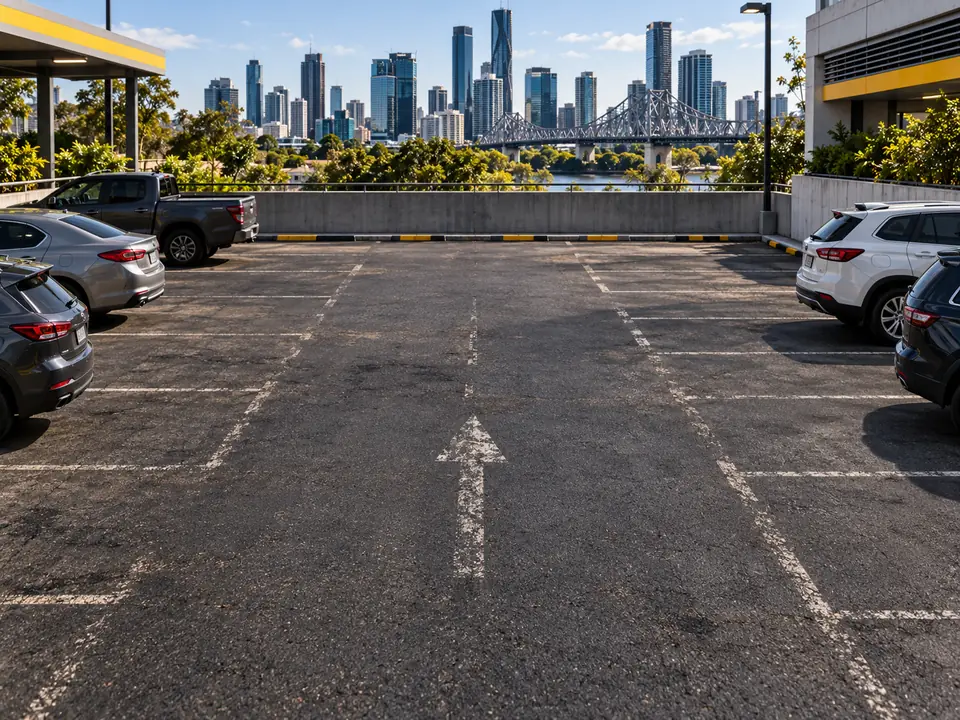
The most obvious sign is fading.
Stand at the entrance to your car park and look across the site as a driver would. Parking bays, arrows, crossings and other important markings should be easy to understand without drivers having to search for them.
Line marking may need attention when:
- White or coloured lines have noticeably faded
- Sections of paint have disappeared
- Markings are much harder to see in wet conditions
- Drivers struggle to identify individual parking bays
- Directional arrows are no longer immediately obvious
Waiting until the paint has completely disappeared can create unnecessary confusion.
Refreshing worn markings earlier can make the job easier and keep the car park looking organised.
2. Vehicles Are No Longer Parking Neatly Inside Bays
Poor parking is not always caused by poor drivers.
Sometimes the parking layout simply isn’t clear enough.
When bay lines become faded or broken, motorists may park too far to one side, cross into neighbouring spaces or leave unusually large gaps between vehicles.
Over a larger commercial car park, this can affect how efficiently the available space is being used.
Watch for:
- Vehicles regularly crossing bay lines
- Inconsistent spacing between parked vehicles
- Drivers hesitating before choosing a bay
- Cars accidentally blocking neighbouring spaces
- Repeated complaints about unclear parking areas
If these problems are occurring in areas where the markings are visibly worn, repainting may help restore a clearer layout.
3. Pedestrian Areas and Crossings Are Fading
Pedestrian markings deserve particular attention.
Queensland workplace traffic-management guidance emphasises separating pedestrians and vehicles wherever reasonably practicable and maintaining clear systems for directing movement around workplaces.
Painted walkways, crossings and exclusion zones can form part of that overall traffic-management system.
Check areas such as:
- Pedestrian crossings
- Designated walkways
- Building entrances
- Loading and unloading areas
- Warehouse pedestrian routes
- Areas where forklifts and people may interact
If a pedestrian route is becoming difficult to distinguish from the surrounding vehicle area, it is worth reviewing rather than waiting until the marking disappears completely.
Line marking should support your wider traffic-management plan—not be treated as a substitute for barriers, signage or other necessary controls.
4. High-Traffic Areas Are Wearing Faster Than the Rest
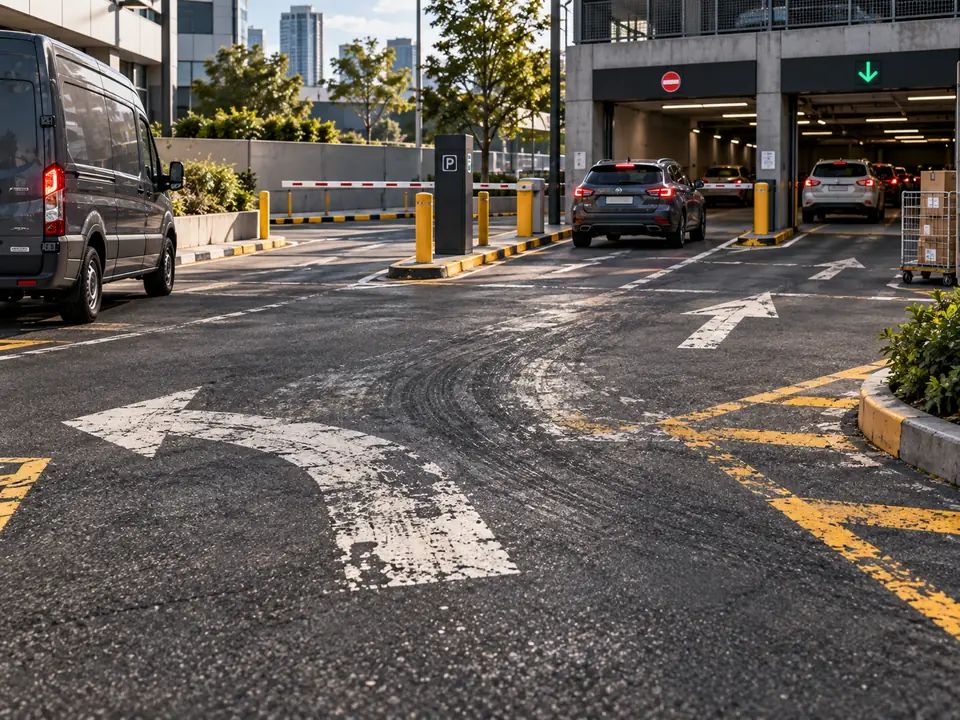
Line marking rarely wears evenly across an entire property.
Areas experiencing frequent braking, turning and vehicle movement generally show deterioration sooner than quieter sections.
Pay particular attention to:
- Entry and exit points
- Sharp corners
- Intersections
- Loading zones
- Drive-through areas
- Shopping centre entrances
- Warehouse loading areas
- Forklift routes
- Busy pedestrian crossings
You may find most of the car park still looks acceptable while several critical sections already need attention.
This is why regular inspections can be more useful than simply deciding to repaint everything after a fixed number of years.
5. Accessible Parking and Important Symbols Are Losing Clarity
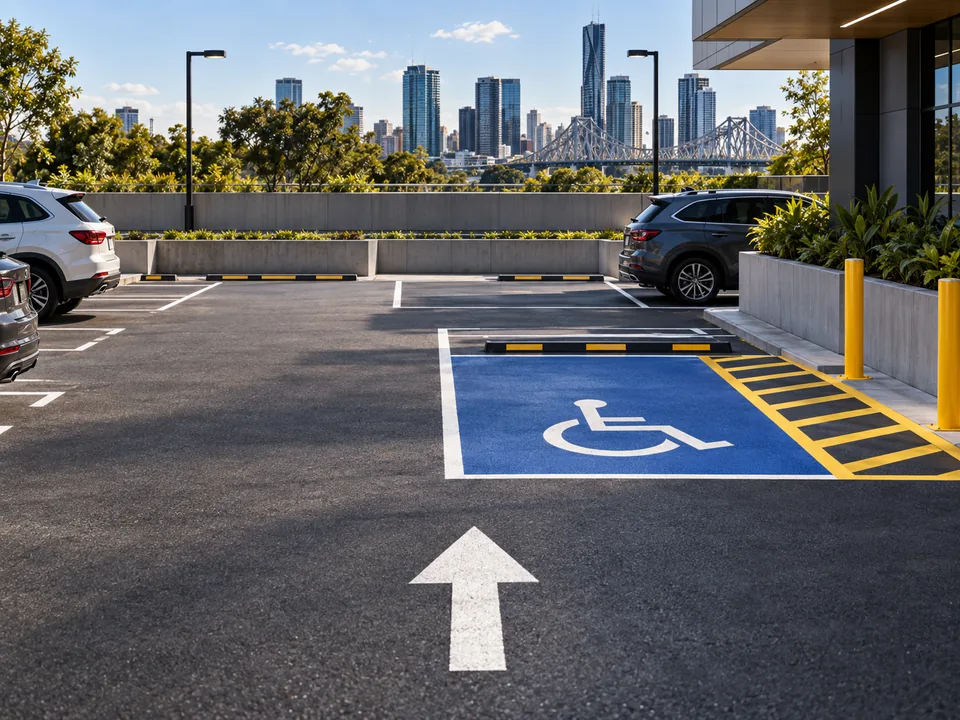
Some markings communicate more than where a vehicle should park.
Accessible parking spaces, directional arrows, loading zones, restricted areas and other symbols need to remain clear enough for people to understand their intended purpose.
If these markings are significantly faded, damaged or partly missing, they should be assessed promptly.
Property managers should also make sure any new or altered parking layout is designed and marked according to the standards and requirements applicable to their particular site.
Professional line marking contractors can work from approved plans and specifications where required, helping ensure the finished markings accurately reflect the intended layout.
6. The Surface Has Been Repaired, Resurfaced or Modified
Sometimes the line marking itself is not the original problem.
Repairs to asphalt or concrete can leave sections of a car park with:
- Partial parking bays
- Interrupted lines
- Old arrows pointing towards a changed layout
- Different colours or levels of fading
- Previous markings showing through
- Confusing combinations of old and new lines
If your property has undergone resurfacing, repairs or a layout change, it is often an ideal time to review the complete marking system.
Old markings may need to be removed or mechanically prepared before new lines are installed, depending on the surface and the condition of the previous coating.
A clean, consistent layout is much easier for drivers and pedestrians to interpret than layers of conflicting markings.
7. People Are Becoming Confused About Traffic Flow
One of the strongest warning signs may come from the people using the property.
Pay attention if tenants, customers, staff or delivery drivers regularly ask questions such as:
- Which way do I exit?
- Is this a parking bay?
- Where is the loading zone?
- Are we allowed to park here?
- Where should pedestrians walk?
- Is this a one-way section?
The markings on a well-organised site should make much of this information immediately understandable.
If users regularly need verbal instructions because the painted layout is no longer clear, the site may benefit from remarking or a broader traffic-management review.
What Causes Car Park Line Marking to Fade?
All line marking experiences wear over time.
For outdoor Brisbane properties, the markings can be exposed to a combination of:
- Vehicle tyres
- Repeated turning and braking
- Heavy vehicle traffic
- Sun and UV exposure
- Rain and moisture
- Dirt and surface contamination
- Oil and automotive fluids
- Regular pressure cleaning
- General surface deterioration
Indoor warehouse markings face different conditions, including forklift traffic, pallet movement, machinery and repeated abrasion.
The condition of the underlying surface also makes a difference.
Paint applied to a properly prepared surface will generally perform better than marking applied over dirt, grease, unstable coatings or deteriorating concrete.
How Often Should Car Park Lines Be Repainted?
There is no universal answer.
A quiet office car park may experience very different wear from a shopping centre, industrial yard, hospital, school or warehouse.
Rather than relying entirely on a fixed timeframe, include line marking in your regular property inspections.
Ask:
- Can drivers clearly identify each parking bay?
- Are directional arrows obvious?
- Are pedestrian areas clearly defined?
- Are loading and restricted areas understandable?
- Are important symbols still easy to recognise?
- Have repairs created inconsistent or missing markings?
- Are users becoming confused about the intended layout?
If several answers raise concerns, it may be time to organise a professional assessment.
Don’t Forget Warehouse and Industrial Line Marking

The same principle applies inside warehouses and industrial facilities.
Clear floor markings can help define:
- Pedestrian walkways
- Forklift routes
- Loading areas
- Storage zones
- Restricted areas
- Safety zones
- Operational areas
Because warehouses can experience constant forklift and equipment movement, some sections may deteriorate faster than others.
Facility managers should regularly inspect high-traffic areas rather than assuming that all floor markings will wear at the same rate.
Where markings no longer match the current warehouse layout, old lines may also need to be removed before the floor is remarked.
Can You Simply Paint Over Old Line Marking?
Sometimes—but not always.
The correct preparation depends on the existing paint, surface condition and new layout.
If the existing lines are sound and the same layout is being refreshed, preparation and recoating may be possible.
However, removal or floor grinding may be appropriate where:
- The layout is changing
- Old markings conflict with new markings
- Existing coatings are peeling
- Multiple layers are affecting the finish
- The surface requires preparation for good adhesion
Surface preparation is an important part of achieving a clean and professional result.
Why Clear Line Marking Matters for Commercial Properties
Fresh line marking immediately improves the appearance of a site, but its value extends beyond presentation.
Clear markings can help:
Improve Traffic Flow
Drivers can understand where to enter, exit, turn and park.
Make Better Use of Available Space
Clearly defined bays reduce inconsistent parking and help maintain the intended car park layout.
Support Pedestrian Management
Walkways and crossings make designated pedestrian routes easier to identify as part of an appropriate traffic-management system.
Improve Property Presentation
Fresh lines can make an older car park or commercial facility look considerably more organised and maintained.
Reduce Confusion
Customers, staff, tenants and delivery drivers can navigate the site with fewer questions.
When Is the Best Time to Organise Remarking?
The best time is before your markings become completely unreadable.
Planning maintenance early gives property managers more flexibility to coordinate the work around site operations.
It can also be practical to combine line marking with related property maintenance.
For example, if a car park requires pressure cleaning, surface repairs or removal of old markings, completing those tasks in the correct order helps prepare the area for the new layout.
For larger commercial or industrial sites, the work may also be divided into stages to help minimise disruption.
Need Your Car Park Line Marking Assessed?
If your parking bays, arrows, pedestrian areas or warehouse markings are beginning to fade, The Experts Group Australia can assess the existing layout and recommend the appropriate preparation and remarking approach.
Our team provides professional line marking for commercial car parks, warehouses, industrial facilities and other sites throughout Brisbane and surrounding areas.
Services can include:
- Car park bay marking
- Warehouse floor marking
- Pedestrian and safety markings
- Directional arrows
- Floor grinding and old marking removal
- Wheel stops
- Speed humps
- Bollards
- Safety signage
Contact The Experts Group Australia to arrange a site inspection and fixed-price quote.
Frequently Asked Questions
How do I know if car park lines need repainting?
If parking bays, arrows, crossings or other markings are becoming difficult to see or causing confusion for drivers and pedestrians, they should be inspected. You do not need to wait until the paint has completely disappeared.
How often should car park line marking be checked?
There is no single inspection schedule suitable for every property. High-traffic commercial and industrial sites should check markings regularly as part of routine property and safety inspections, particularly in areas exposed to frequent turning, braking or heavy vehicles.
Does old line marking need to be removed before repainting?
Not necessarily. If the same layout is being refreshed and the existing coating is suitable, preparation and recoating may be possible. Old markings may need removal or grinding where layouts are changing, coatings are failing or previous markings could create confusion.
Why do some car park lines fade faster than others?
Traffic volume, turning movements, weather exposure, surface preparation, contamination and the underlying pavement condition can all affect wear. Entrances, corners and loading areas often experience more abrasion than low-traffic bays.
Can warehouse floor markings also be refreshed?
Yes. Warehouse markings can be refreshed or redesigned when pedestrian routes, forklift areas, storage zones or operational layouts change. Old markings may need removal before a new layout is applied.




